

When is a ‘blood swab’ not a blood swab?
Forensic biology evidence is often spoken about in court as though it is straightforward: blood was found, it was tested, and it matches the accused. The language can sound objective and definitive. However, the scientific reality is frequently more nuanced. In many cases, a sample described as blood has never...

The prejudice of DNA- TPPR
DNA TRANSFER FACTORS The factors of DNA transfer, persistence, prevalence and recovery (DNA – TPPR) can be both relevant and prejudicial to the jury. The prejudice of DNA – TPPR manifests when the court forms a false understanding that the general principles are evidence of a scientific evaluation of the...

What Every Lawyer Should Know About Forensic DNA Analysis in Australia
Forensic DNA evidence plays a central role in many criminal cases across Australia. It is often perceived as definitive, objective, and conclusive. However, DNA evidence is only as strong as the way it is collected, analysed, interpreted, and presented. For lawyers, a working understanding of forensic DNA analysis is essential...

DNA before New Zealand courts
DNA before New Zealand courts The R v Wells conviction and New Zealand High Court appeal, illuminates novel "fragile sperm" DNA expert opinion. The opinion was acknowledged to be without no supporting data, and was led in support where no sperm had in fact been detected. Such expert speculations are...

DNA Evidence in Sexual Assault Cases: What It Can and Cannot Prove
Sexual assault allegations account for a significant proportion of criminal proceedings in which DNA evidence is relied upon. In many cases, the presence of DNA is treated - explicitly or implicitly - as corroborative of the prosecution narrative. However, the forensic limits of DNA evidence in sexual assault cases are...
DNA transfer “more likely” is not science
DNA Transfer When considering "how" the DNA was deposited, we must not apply "more likely" before the courts, and should correctly apply the scientific approach defined as Activity Level Reporting. "more likely" statements in expert evidence have been prevalent in known DNA wrongful convictions which is detailed further in Fitzgerald...
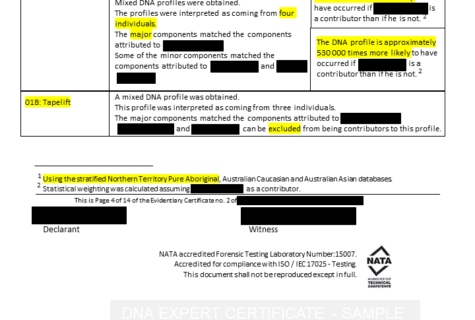
DNA expert certificate – lawyer interpretation guide
Lawyer interpretation guide Criminal matters involving DNA can be evidenced by the crown in various ways, depending in part upon the particular state lab, severity of the matter, and the maturity of the matter before the courts. In Australia, all states and territories will at some stage serve a form...
Fitzgerald wrongful conviction – Why it can happen again
Fitzgerald wrongful conviction The DNA wrongful conviction Fitzgerald v R turned on how the DNA was deposited. The scientifically invalid "DNA more likely" repeats itself in 2024 Australian courts as it did in the Fitzgerald wrongful conviction To consider "how" DNA was transferred, the DNA expert must conduct Activity Level...
Efficacy of expert evidence
“White coat effect” The efficacy of evidence at trial, is undoubtedly predicated on how that evidence is perceived by jurors, and the court. The preparation of inherently complex scientific and forensic evidence must be purposeful and meticulous. It is critical that evidence presented to the jury is clear, simple and...

LAWYERS-DNA TOOLKIT
- 2 Minute DNA explainers
- 110+ scientific paper extracts
- Lab report explainers
- Scientific Guidelines