Unless challenged, DNA evidence will generally be heard by the court.
The underlying science must be properly examined to determine reliability.
DNA contamination is far from uncommon and is one such basis for challenge.
In appropriate cases, contamination can render DNA evidence unreliable and lead to its exclusion
We routinely advise scientifically on matters where DNA evidence is challenged and excluded.
DNA contamination refers to the unintended transfer of DNA onto an item or sample, resulting in DNA being detected that is unrelated to the alleged events.
It can occur through:
- - handling at the crime scene
- - packaging and transport
- - laboratory processes
- - indirect transfer between people and surfaces
Contaminated DNA does not appear different in laboratory reporting and may produce invalidly strong results.
DNA Contamination in Criminal Cases: WA v Piccioni Explained
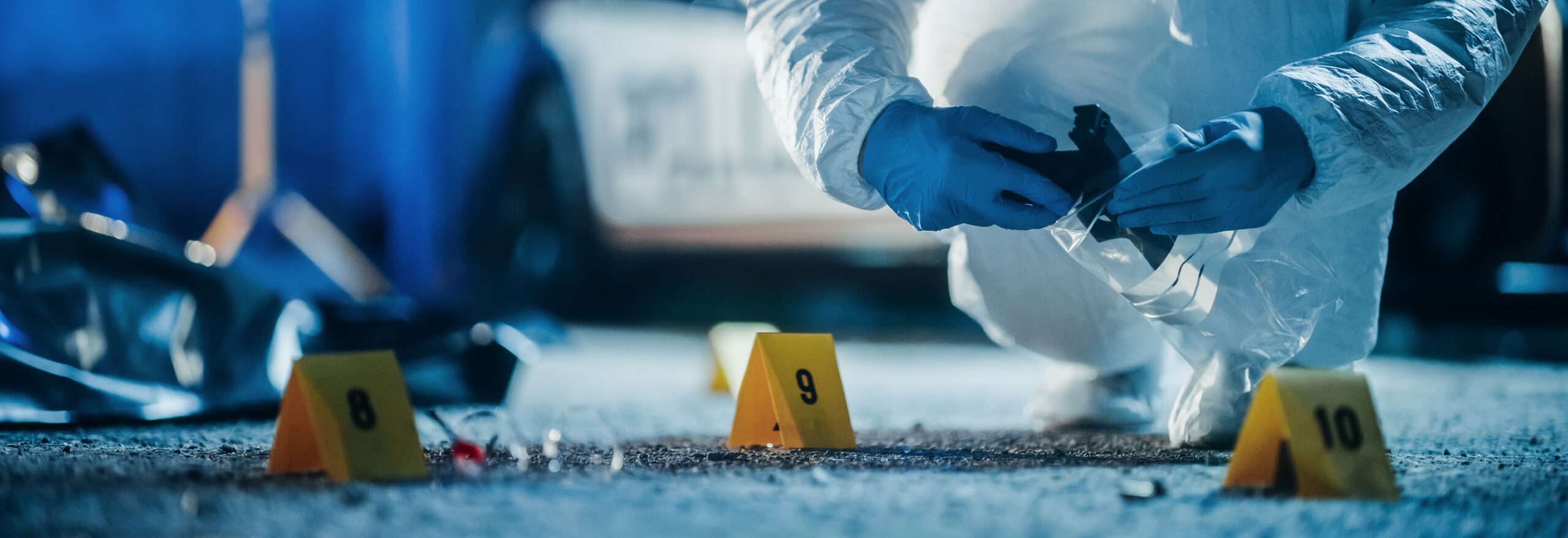
DNA contamination can arise through crime scene handling, packaging, laboratory processes, or investigator-mediated contamination.
Contaminated DNA doesn’t look different.
Its presence can seem just as conclusive — but DNA evidence can be wrong.
Contamination is undoubtedly significant and a jury might never have to hear that evidence.
This case explainer of THE STATE OF WESTERN AUSTRALIA -v- PICCIONI [2025] WADC 69 sets out why the DNA was excluded, bringing the prosecution to an end.
1. The allegation
- It was alleged that firearms within a locked shed belonged to the defendant.
- DNA testing by the state laboratory identified a DNA profile matching the defendant.
- The DNA results upon firearms were substantially relied upon to support the prosecution.
2. THE BACKGROUND
The locked storage shed contained a wide range of general items.
Police conducted a coordinated search of the premises with over 10 officers.
Firearms were located along with other items including ammunition.
The items of interest were bagged and removed for later sampling and DNA testing.
Over 40 minutes of video footage was recorded by police throughout the search.
The footage depicted police variously handling items during the search.
The shed was understood to be accessed by the defendant and another individual and contained goods belonging to both persons.
Note: Whilst the items of interest were firearms, the contamination issues identified in this case were not necessarily related to the forensic item type. For example, if the items of interest were drugs bags or bundles of cash, and those items were subjected to the same crime scene handling as in this matter, the contamination considerations would be broadly consistent.
3. What the DNA report did and didn’t say
- The lab report identified DNA matching the accused.
- The report did not identify DNA matching the other person who accessed and had goods within the shed.
- Almost always, the DNA report will not review or report the sampling or crime scene handling.
- In this case, there had been issues raised by the defence to the prosecution about the crime scene handling, and the lab expert had reviewed and subsequently reported upon the search footage.
- The report set out a series of issues with the police handling of items.
- The report went on to state – “Whilst the above outlines flaws in the contamination minimisation techniques employed in this instance, there is no expectation that DNA transfer (contamination) has occurred as a result of such flaws.”
4. The Pre-Trial Contamination Hearing
- The admissibility of the DNA evidence was challenged by defence.
- Courts assess admissibility of DNA evidence using established evidentiary principles.
- An early hearing (voir dire) was held, where the parts of law and science were put before the judge.
- The experts in this case were not cross examined, and the judge gave consideration to the reports of both experts.
- The lawyers made detailed submissions to the judge.
- The judge described the courts task: My role in determining this application is to determine whether the prejudicial effect of the proposed DNA evidence outweighs any probative value it might hold.
5. Why the DNA evidence was refused
- The issue in this case was not whether DNA was detected.
- The question became, could this DNA evidence support the allegation, and should a jury hear it?
- That question is part legal and part scientific.
Judge Astill stated:
“ What is perhaps more significant from Ms Roebuck's criticism of this swabbing method is the consequences that come from it. Because the swabs were taken across the entire surface of each firearm, rather than specific locations, it is likely to have the following consequences:
(a) it increases the likelihood of recovering a mixed DNA sample from multiple sources, and potentially multiple contributors, on the firearm surface;
(b) a greater complexity in any such mixture reduces the prospects of being able to make a reliable comparison;
(c) it eliminates any ability to determine the precise locations on the firearm where particular DNA profiles were deposited; and
(d) there is a reduced capacity to show the implausibility of secondary transfer because of contamination, since it cannot be shown that the identified DNA profiles were absent from areas where secondary transfer might have occurred.
Ms Roebuck, in providing her opinion, is both more explicit, as well as more accurately aligned with the evidentiary onus being upon the prosecution. In the Roebuck report, she opines:
The extensive flaws in the crime scene procedure demonstrate numerous pathways for [the accused's] available DNA to have been transferred by officers at the premises. I cannot conclude in these circumstances that contamination of the Smith and Wesson firearm has not occurred.
Ms Roebuck's opinion more accurately reflects the significance of secondary transfer through investigator mediated contamination by reference to the operation of the standard and onus of proof placed upon the prosecution, I prefer and adopt her formulation.”
Judge Astill ruled: “To admit this evidence into any trial of the accused would result in an unfairness that cannot be cured by direction. Because of this, the evidence is inadmissible.”
DNA contamination may also arise within the laboratory environment.
DNA may be transferred between samples during processing.
Shared equipment or surfaces may introduce foreign DNA.
Low-level DNA detection increases sensitivity to background contamination.
Laboratory contamination does not appear any different to uncontaminated DNA.
The result may still appear artificially strong.
This means the issue is not whether DNA is present, but whether it can be safely attributed to the alleged activity.
6. How DNA Evidence Can Be Challenged in Court
DNA evidence in court is typically challenged through detailed scientific review of the laboratory casefile and the assumptions underlying the reported results.
Helen Roebuck’s scientific review and opinions relied upon:
- Contemporaneous notes and witness statements
- Substantial video footage
- Electropherograms
- DNA statistics
- Published scientific research data
- The two substantive reports
7. How DNA contamination applies to your matter
- Any DNA profile may be the result of or suffer from contamination.
- Contamination may occur at the crime scene, during packaging, during transport, or within the laboratory environment.
- The mere possibility would generally not be sufficient to warrant challenge.
- Proper consideration of DNA contamination requires a scientific review.
- A particular allegation requires careful scientific evaluation of the pathways by which DNA may have been deposited.
- - interrogation of the DNA casefile
- - review of electropherograms
- - assessment of number of contributors
- - review of contamination records
- - consideration of sampling notes
- - evaluation of item handling and seizure procedures
Do you need a DNA expert?
Legal defence and DNA interpretation are different and specific fields of practice.
Early scientific review can determine whether contamination concerns are speculative, or whether they materially affect the evidentiary strength.
An application to exclude DNA evidence involves complex legal process.
It should also be considered alongside detailed scientific review and interpretation.
The courts approach to DNA evidence and its exclusion is not static.
The matter of WA v Piccioni is a significant ruling.
Helen Roebuck frequently works DNA exclusion matters.
Helen Roebuck is a strongly credentialed and highly regarded forensic DNA expert, trusted within both the legal and scientific communities. She is the most prolific and judgment-published independent DNA expert witness in Australia
Having reviewed DNA evidence in thousands of indictable matters over the last 25 years including homicide, sexual assault and drugs importation.
Accepting simple and complex Legal Aid and privately funded briefs across Australia, New Zealand and select international jurisdictions.
Published judgments:
WA v Piccioni [2025] – WA District Court
R v Murphy [2024] – NSW District Court
LGBTIQ Hate Crimes Inquiry [2023] – NSW
R v Granaghan [2022] – N Ireland Crown
R v Perre [2021] – SA Supreme Court
R v Ke [2019] – NSW District Court
R v TAL [2019] – QLD Supreme Court
R v Haouchar [2025] – NSW District Court
R v Ahmad [2024] – NSW District Court
Evans v R [2023] – NSW Supreme Court
R v Tsakirios [2021] – NSW District
R v Kabbout [2020] – NSW District Court
A short forensic review can often determine whether the DNA evidence genuinely supports the allegation and whether the matter has scientific merit to support an application for exclusion of the DNA.