


ARTICLES IN PRINT
Helen Roebuck’s forensic evidence and professional commentary have been referenced in law society publications and legal education across multiple Australian jurisdictions. These contributions reflect ongoing engagement with criminal practitioners on issues including DNA interpretation, transfer, admissibility, and the evidentiary limits of forensic science in court.
Western Australia Law Society – The DNA ruling that should reshape forensic practice
Article examining a significant judicial treatment of DNA evidence and its implications for forensic practice in criminal proceedings.
Queensland Law Society – DNA expert urges lawyers to challenge evidence
Commentary directed to criminal practitioners on the careful scrutiny and interpretation of forensic DNA evidence in court.
Tasmanian Law Society – DNA and wrongful conviction in 2024
Discussion of the role forensic evidence can play in wrongful convictions and the importance of scientific evaluation in criminal matters.
Law Society Northern Territory – DNA expert certificate: a lawyer’s interpretation guide
Practical guidance for criminal lawyers on understanding forensic DNA certification and evidentiary meaning in court proceedings.
Law Society of South Australia – DNA evidence: when prejudicial effect outweighs probative value
Analysis of the evidentiary limits of DNA findings and the circumstances in which their forensic value may be contested.
Queensland Law Society – Apply science carefully in court
Professional commentary on the interpretation of forensic science in litigation and the need for careful evaluation of DNA evidence.
New South Wales Law Society – Key changes to use of DNA evidence in courtrooms
An interview discussing emerging controversial methods applied to DNA evidence and how experts might address the “how” in today’s courtroom.
judicial references
Helen Roebuck’s forensic DNA evidence has been considered in published judicial decisions addressing the interpretation, reliability and evidentiary significance of DNA findings in criminal proceedings.
Her evidence has been referenced in numerous additional published judgments across Australian courts, alongside many matters in which expert evidence was given but no written judgment was ultimately issued.
State of Western Australia v Piccioni [2025] WADC 69
Judicial consideration of investigator-mediated DNA transfer and the reliability of forensic handling practices.
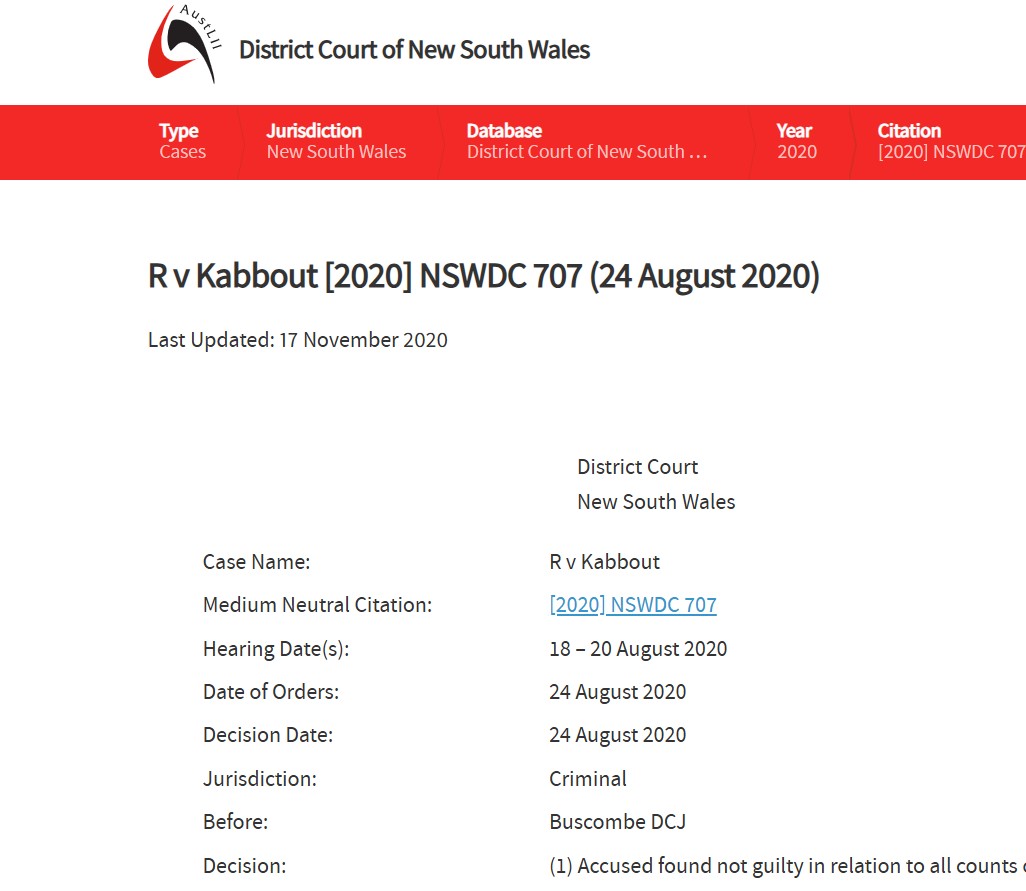
R v Kabbout [2020] NSWDC 707
Judicial treatment of secondary DNA transfer and the evidentiary weight of mixed DNA findings.
R v Ke [2019] NSWDC 349
Judicial consideration of the probative value of DNA evidence where activity-level interpretation remained unresolved.
These decisions illustrate broader judicial engagement with Helen Roebuck’s forensic evidence across a range of criminal proceedings involving complex DNA interpretation.
INVITED SPEAKING
Criminal practitioners understand that DNA evidence rarely speaks for itself. Effective use of forensic evidence requires a degree of fluidity – translating complex scientific findings into a clear, coherent strategy that aligns with the issues in dispute.
Helen Roebuck is regularly invited to present to legal audiences and provides practical, courtroom-focused education on DNA evidence and its interpretation. She has spoken for organisations including Legal Aid NSW, the Law Institute of Victoria, the South Australian Bar Association, the NSW Public Defenders, the Tasmania Law Society, and the Northern Territory Law Society, as well as the Australian Institute of Judicial Administration.
Helen also presents to scientific audiences at major forensic conferences, including the International Association of Forensic Sciences and The Australian and New Zealand Forensic Science Society, supporting collaboration between the legal and forensic communities and improving the communication of DNA evidence in court.
INVITED SPEAKING
Criminal practitioners understand that DNA evidence rarely speaks for itself. Effective use of forensic evidence requires a degree of fluidity – translating complex scientific findings into a clear, coherent strategy that aligns with the issues in dispute.
Helen Roebuck is regularly invited to present to legal audiences and provides practical, courtroom-focused education on DNA evidence and its interpretation. She has spoken for organisations including Legal Aid NSW, the Law Institute of Victoria, the South Australian Bar Association, the NSW Public Defenders, the Tasmania Law Society, and the Northern Territory Law Society, as well as the Australian Institute of Judicial Administration.
Helen also presents to scientific audiences at major forensic conferences, including the International Association of Forensic Sciences and The Australian and New Zealand Forensic Science Society, supporting collaboration between the legal and forensic communities and improving the communication of DNA evidence in court.



Forensic Commentary & Case Insights

DNA Transfer in Criminal Trials: When “Possible” Moves to Implausible
DNA transfer is now a familiar concept in criminal proceedings. Most practitioners recognise that the presence of DNA does not, of itself, establish how it was deposited. The proposition that science cannot conclusively determine the pathway of transfer is widely accepted and often forms part of defence thinking as trial…

DNA Transfer at Trial: Why the Issue Is Rarely as Simple as It Appears
In criminal proceedings involving DNA evidence, the question of transfer is almost always present. Even experienced practitioners recognise that the presence of DNA does not, of itself, establish how it was deposited. The familiar proposition — that science cannot say how DNA got there — is now widely understood within…
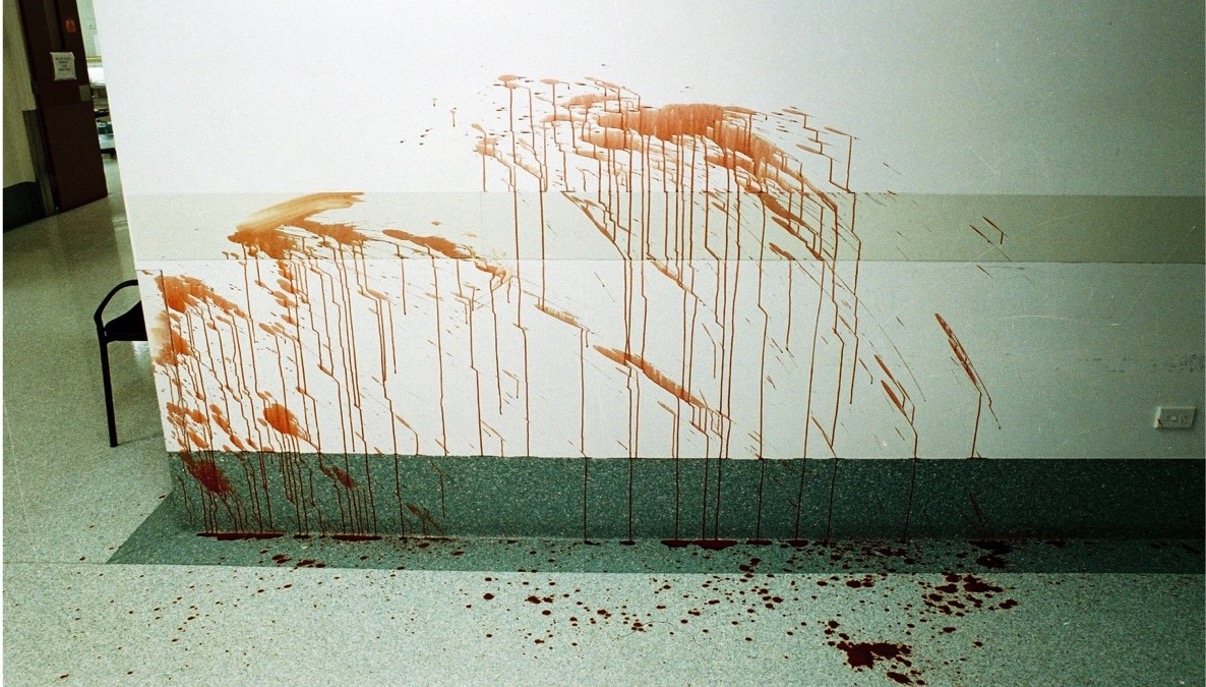
Activity Level Reporting in Australian Criminal Trials: Why It Is Emerging Now
Over the past decade, criminal lawyers across Australia have begun encountering a term that was rarely used in courtroom forensic reporting only a few years earlier: activity level evaluation. For many practitioners, the concept can feel new. In reality, it reflects a gradual evolution in forensic DNA interpretation that has…
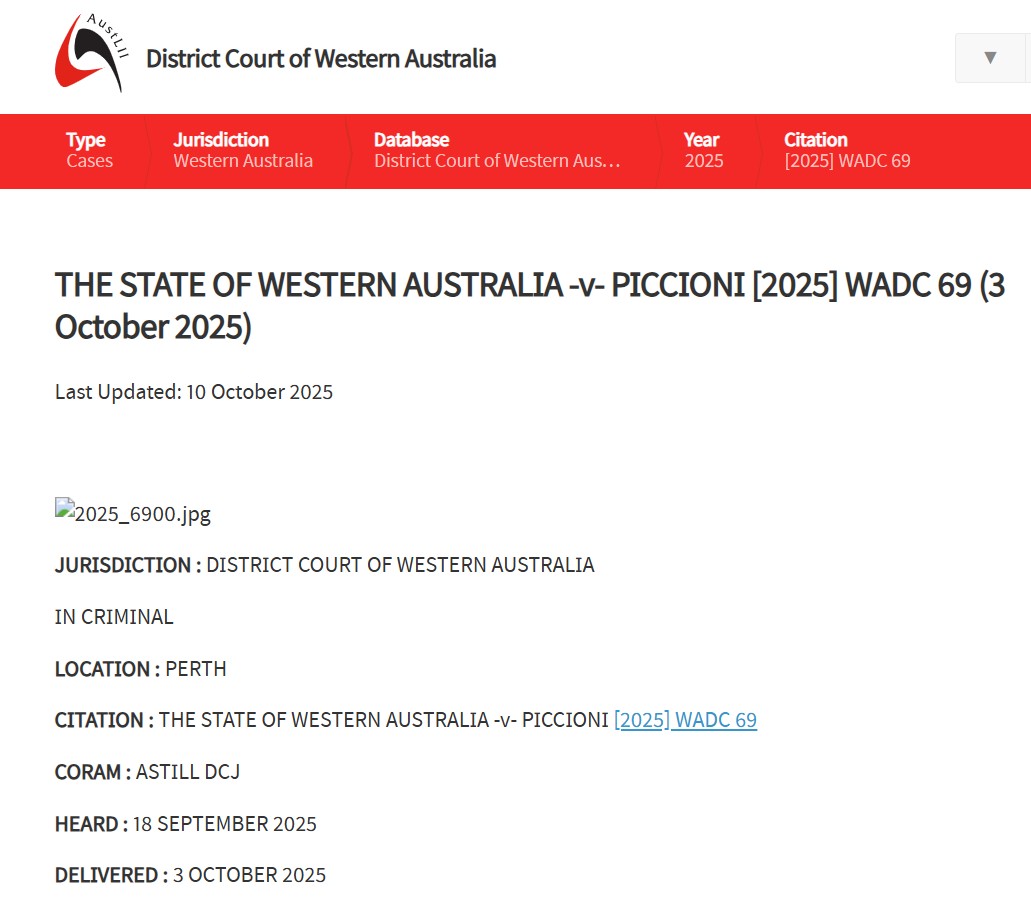
Investigator-Mediated Contamination: Why WA v Piccioni Matters Nationally
Forensic DNA evidence is often regarded as objective and reliable. However, the District Court decision in State of Western Australia v Piccioni represents a significant shift in how courts are prepared to scrutinise the conditions under which DNA evidence is generated, particularly where contamination may arise from investigative handling. The…
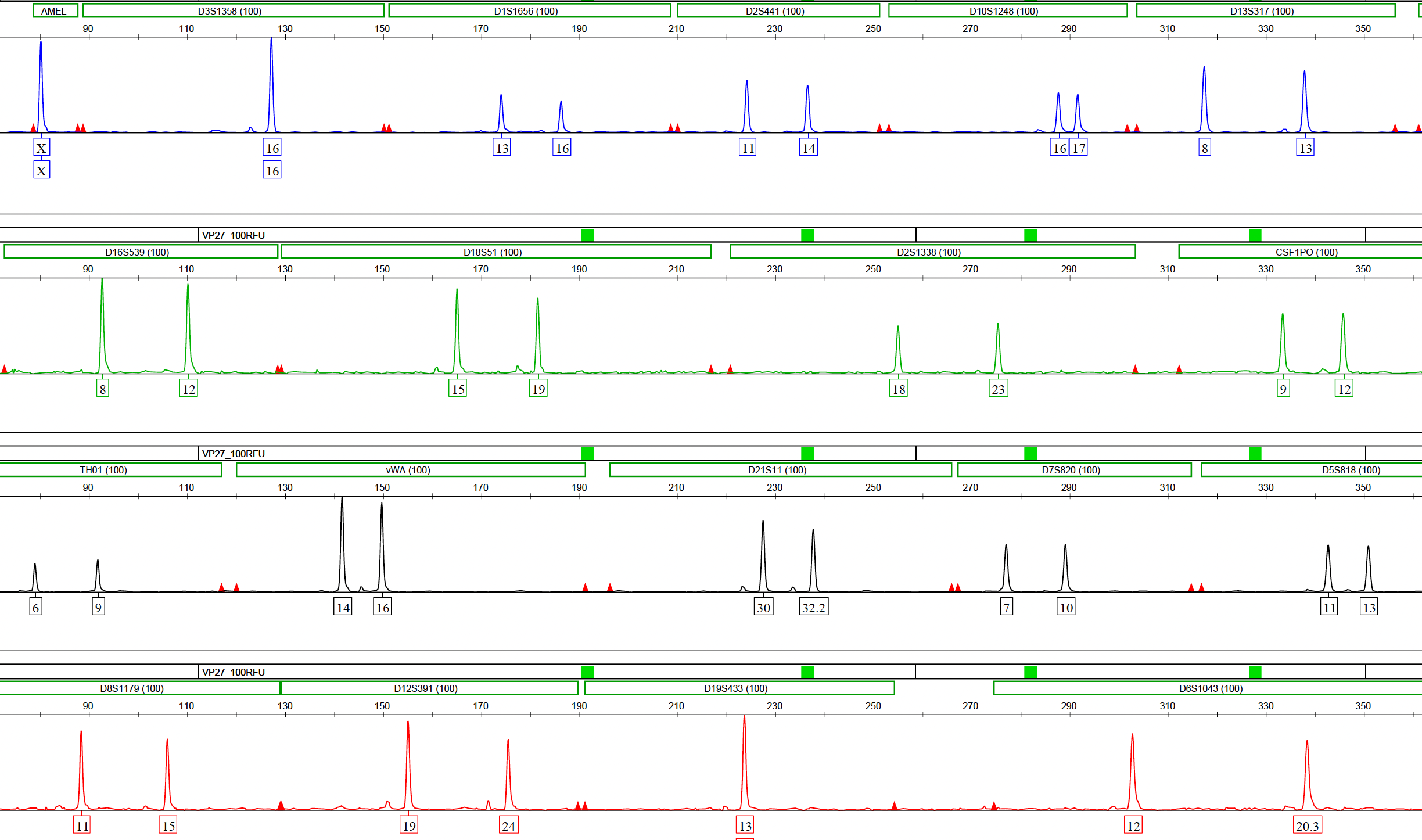
Challenging DNA Evidence: When Courts Exclude It Before Trial
DNA evidence can be ruled inadmissible in Australian courts. The DNA evidence will be heard at trial unless challenged. In reality, courts can refuse the DNA. This is known as DNA evidence exclusion. When DNA evidence is excluded, the jury never hears it. We are regularly instructed in matters where…
When DNA Evidence Can Be Refused
Investigator-Mediated Contamination and the Lessons from State of Western Australia v Piccioni Across Australia, criminal lawyers routinely confront the same practical problem: DNA evidence looks compelling on paper — but something about it doesn’t sit right. Whether the issue is framed as unfair prejudice outweighing probative value, unreliable evidence, or…

When DNA Evidence Changes at Trial
The Risk of Oral Opinion – and How Defence Expert Reporting Can Prevent Ambush In Australian criminal proceedings, DNA evidence is almost always generated and reported by state forensic laboratories. Those reports are typically confined to analytical results: profiles obtained, comparisons made, and statistics calculated. What they rarely do is…

How Contamination and Transfer Can Affect Your DNA Evidence
DNA evidence is often regarded as the gold standard of forensic science. However, DNA results are only as reliable as the processes used to collect, analyse, and interpret them. One of the most misunderstood, and frequently underestimated, issues in forensic DNA analysis is contamination and DNA transfer. In this article,…
Time Since Intercourse Evaluations in Sexual Assault Cases
Time Since Intercourse Evaluations in Sexual Assault Cases In sexual offence matters, when intercourse occurred can be just as important as whether it occurred. In some cases, there are two clear and competing accounts: The defendant states that he and the complainant engaged in consensual intercourse on Tuesday.The complainant alleges…

When DNA Evidence Appears Stronger Than It Is in Sexual Assault Cases
DNA Evidence in Sexual Assault Cases A common feature of many sexual assault prosecutions is that DNA evidence appears, at first glance, to provide scientific support for the allegation. Medical examination may identify semen, trace DNA may be recovered from clothing or bedding, and laboratory reporting may confirm that the…
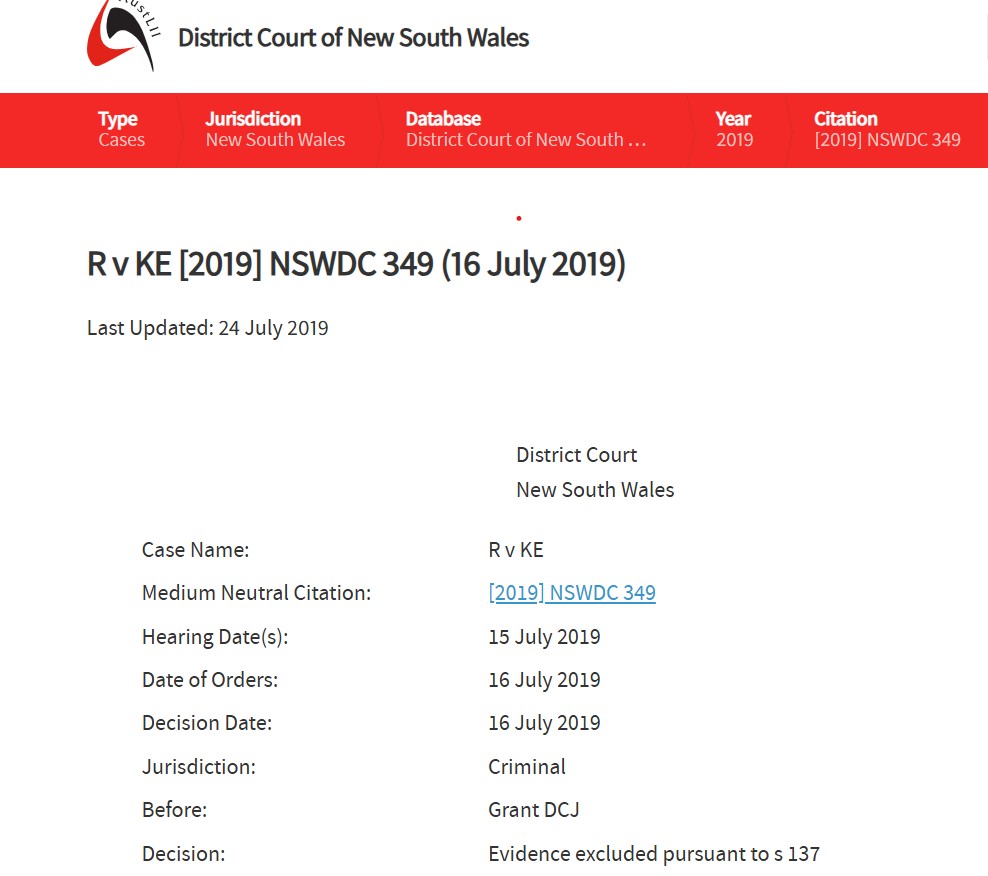
Secondary DNA Transfer and the Limits of DNA Evidence: Lessons from R v Ke
DNA evidence is frequently relied upon in sexual assault prosecutions, particularly where DNA is recovered from intimate swabs. However, the presence of DNA alone does not necessarily resolve the critical forensic question before the court: how the DNA was deposited? The District Court decision to exclude DNA evidence in R…
DNA and Semen Identified— Don’t Assume One Donor
Understanding a Common Misinterpretation in Sexual Assault Cases In sexual assault prosecutions, DNA evidence often carries significant weight — particularly where a report refers to semen detection alongside a DNA likelihood ratio that includes the accused. It is not uncommon for this combination to be interpreted as meaning the accused’s…
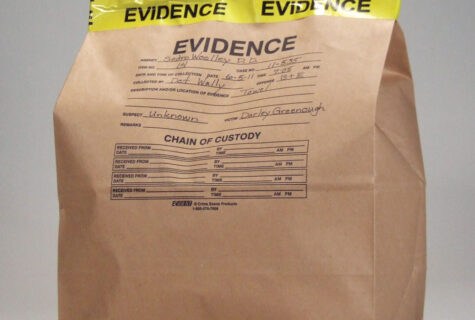
DNA Transfer Inside Exhibit Packaging
When the Evidence Changes After Collection Criminal lawyers are taught to scrutinise how DNA evidence is collected at a crime scene.Far less attention is paid to what happens after the exhibit is sealed. Yet a growing body of forensic research shows that DNA evidence can change inside its own packaging…

“Touch DNA” in Criminal Cases
What Criminal Lawyers Should Know — and Why IT is dangerous In criminal cases, lawyers may find themselves familiar with the phrase “touch DNA.” In scientific research and literature, the term might be used to describe DNA originating from skin cells left behind after contact by touch with an object,…
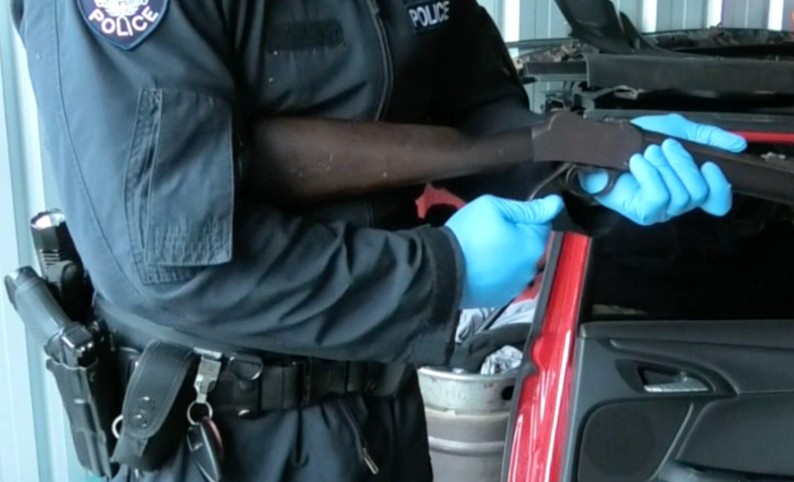
Secondary DNA Transfer and the Weight of DNA Evidence in Criminal Trials
Helen Roebuck was the independent forensic DNA expert engaged for the defence in R v Kabbout [2020] NSWDC 707, a New South Wales District Court decision published on AustLII. The matter involved DNA recovered from the handgrip of a firearm and provides an important illustration of how DNA evidence may…

When is a ‘blood swab’ not a blood swab?
Forensic biology evidence is often spoken about in court as though it is straightforward: blood was found, it was tested, and it matches the accused. The language can sound objective and definitive. However, the scientific reality is frequently more nuanced. In many cases, a sample described as blood has never…

DNA Case Review Services in Australia: Independent Expert Analysis That Matters
DNA evidence is often presented as objective and definitive. In reality, forensic DNA evidence involves interpretation, assumptions, and judgment at every stage. When a case turns on DNA findings, those interpretational decisions matter. DNA case review services in Australia provide independent, expert evaluation of forensic DNA evidence to ensure conclusions…
The prejudice of DNA- TPPR
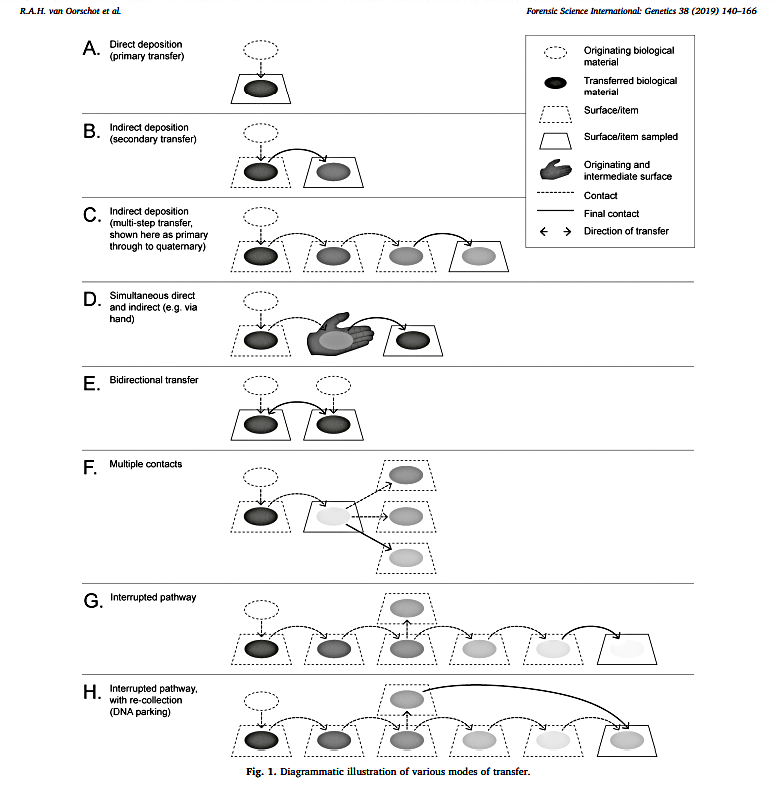
DNA TRANSFER FACTORS The factors of DNA transfer, persistence, prevalence and recovery (DNA – TPPR) can be both relevant and prejudicial to the jury. The prejudice of DNA – TPPR manifests when the court forms a false understanding that the general principles are evidence of a scientific evaluation of the…

What Every Lawyer Should Know About Forensic DNA Analysis in Australia
Forensic DNA evidence plays a central role in many criminal cases across Australia. It is often perceived as definitive, objective, and conclusive. However, DNA evidence is only as strong as the way it is collected, analysed, interpreted, and presented. For lawyers, a working understanding of forensic DNA analysis is essential…

DNA before New Zealand courts
DNA before New Zealand courts The R v Wells conviction and New Zealand High Court appeal, illuminates novel “fragile sperm” DNA expert opinion. The opinion was acknowledged to be without no supporting data, and was led in support where no sperm had in fact been detected. Such expert speculations are…
DNA Evidence in Sexual Assault Cases: What It Can and Cannot Prove
Sexual assault allegations account for a significant proportion of criminal proceedings in which DNA evidence is relied upon. In many cases, the presence of DNA is treated – explicitly or implicitly – as corroborative of the prosecution narrative. However, the forensic limits of DNA evidence in sexual assault cases are…
DNA transfer “more likely” is not science
DNA Transfer When considering “how” the DNA was deposited, we must not apply “more likely” before the courts, and should correctly apply the scientific approach defined as Activity Level Reporting. “more likely” statements in expert evidence have been prevalent in known DNA wrongful convictions which is detailed further in Fitzgerald…
DNA expert certificate – lawyer interpretation guide
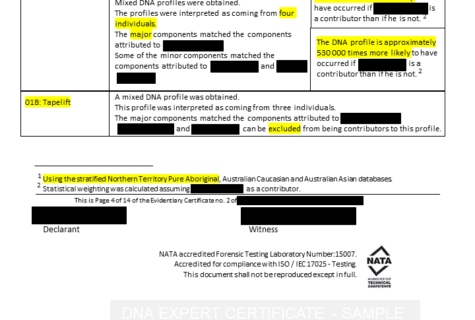
Lawyer interpretation guide Criminal matters involving DNA can be evidenced by the crown in various ways, depending in part upon the particular state lab, severity of the matter, and the maturity of the matter before the courts. In Australia, all states and territories will at some stage serve a form…
Fitzgerald wrongful conviction – Why it can happen again
Fitzgerald wrongful conviction The DNA wrongful conviction Fitzgerald v R turned on how the DNA was deposited. The scientifically invalid “DNA more likely” repeats itself in 2024 Australian courts as it did in the Fitzgerald wrongful conviction To consider “how” DNA was transferred, the DNA expert must conduct Activity Level…

Efficacy of expert evidence
“White coat effect” The efficacy of evidence at trial, is undoubtedly predicated on how that evidence is perceived by jurors, and the court. The preparation of inherently complex scientific and forensic evidence must be purposeful and meticulous. It is critical that evidence presented to the jury is clear, simple and…

DNA Expert Evidence – How Good Science Fails
DNA Expert Evidence This article provides an overview of the relationship between mixed DNA profiles and the software commonly utilised in the United States, Australia, New Zealand, and the United Kingdom to interpret profiles for consideration as to identity. Roebuck Forensics proffers DNA expert witness testimony regarding serious criminal matters….

Hate Crimes Inquiry – 2023
Scott Stuart Miller – Cause of Death On 18 December 2023, the Special Commission of Inquiry into LGBTIQ hate crimes delivered its report to the Governor of New South Wales. I was engaged by the Inquiry to conduct an examination of Mr Miller’s clothing for the purposes of bloodstain pattern analysis. The…