

Activity Level Reporting in Australian Criminal Trials: Why It Is Emerging Now
Over the past decade, criminal lawyers across Australia have begun encountering a term that was rarely used in courtroom forensic reporting only a few years earlier: activity level evaluation. For many practitioners, the concept can feel new. In reality, it reflects a gradual evolution in forensic DNA interpretation that has...

Investigator-Mediated Contamination: Why WA v Piccioni Matters Nationally
Forensic DNA evidence is often regarded as objective and reliable. However, the District Court decision in State of Western Australia v Piccioni represents a significant shift in how courts are prepared to scrutinise the conditions under which DNA evidence is generated, particularly where contamination may arise from investigative handling. The...

Challenging DNA Evidence Under Modern Expert Evidence Rules
Courts across Australia are tightening expectations around how scientific expert evidence is prepared, expressed and tested. These developments are often viewed as procedural — something that becomes relevant close to trial. In practice, however, they change how DNA evidence should be approached from the moment it is first served. For...

When DNA Evidence Can Be Refused
Investigator-Mediated Contamination and the Lessons from State of Western Australia v Piccioni Across Australia, criminal lawyers routinely confront the same practical problem: DNA evidence looks compelling on paper — but something about it doesn’t sit right. Whether the issue is framed as unfair prejudice outweighing probative value, unreliable evidence, or...

When DNA Evidence Changes at Trial
The Risk of Oral Opinion - and How Defence Expert Reporting Can Prevent Ambush In Australian criminal proceedings, DNA evidence is almost always generated and reported by state forensic laboratories. Those reports are typically confined to analytical results: profiles obtained, comparisons made, and statistics calculated. What they rarely do is...

How Contamination and Transfer Can Affect Your DNA Evidence
DNA evidence is often regarded as the gold standard of forensic science. However, DNA results are only as reliable as the processes used to collect, analyse, and interpret them. One of the most misunderstood, and frequently underestimated, issues in forensic DNA analysis is contamination and DNA transfer. In this article,...

Time Since Intercourse Evaluations in Sexual Assault Cases
Time Since Intercourse Evaluations in Sexual Assault Cases In sexual offence matters, when intercourse occurred can be just as important as whether it occurred. In some cases, there are two clear and competing accounts: The defendant states that he and the complainant engaged in consensual intercourse on Tuesday.The complainant alleges...
When DNA Evidence Appears Stronger Than It Is in Sexual Assault Cases
DNA Evidence in Sexual Assault Cases A common feature of many sexual assault prosecutions is that DNA evidence appears, at first glance, to provide scientific support for the allegation. Medical examination may identify semen, trace DNA may be recovered from clothing or bedding, and laboratory reporting may confirm that the...
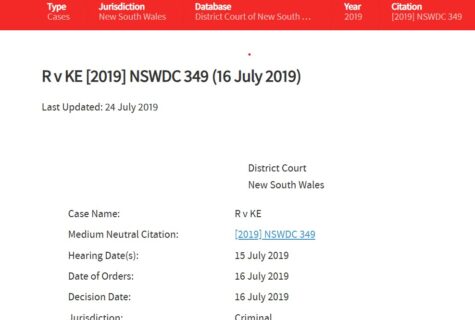
Secondary DNA Transfer and the Limits of DNA Evidence: Lessons from R v Ke
DNA evidence is frequently relied upon in sexual assault prosecutions, particularly where DNA is recovered from intimate swabs. However, the presence of DNA alone does not necessarily resolve the critical forensic question before the court: how the DNA was deposited? The District Court decision to exclude DNA evidence in R...

DNA and Semen Identified— Don’t Assume One Donor
Understanding a Common Misinterpretation in Sexual Assault Cases In sexual assault prosecutions, DNA evidence often carries significant weight — particularly where a report refers to semen detection alongside a DNA likelihood ratio that includes the accused. It is not uncommon for this combination to be interpreted as meaning the accused’s...

LAWYERS-DNA TOOLKIT
- 2 Minute DNA explainers
- 110+ scientific paper extracts
- Lab report explainers
- Scientific Guidelines